

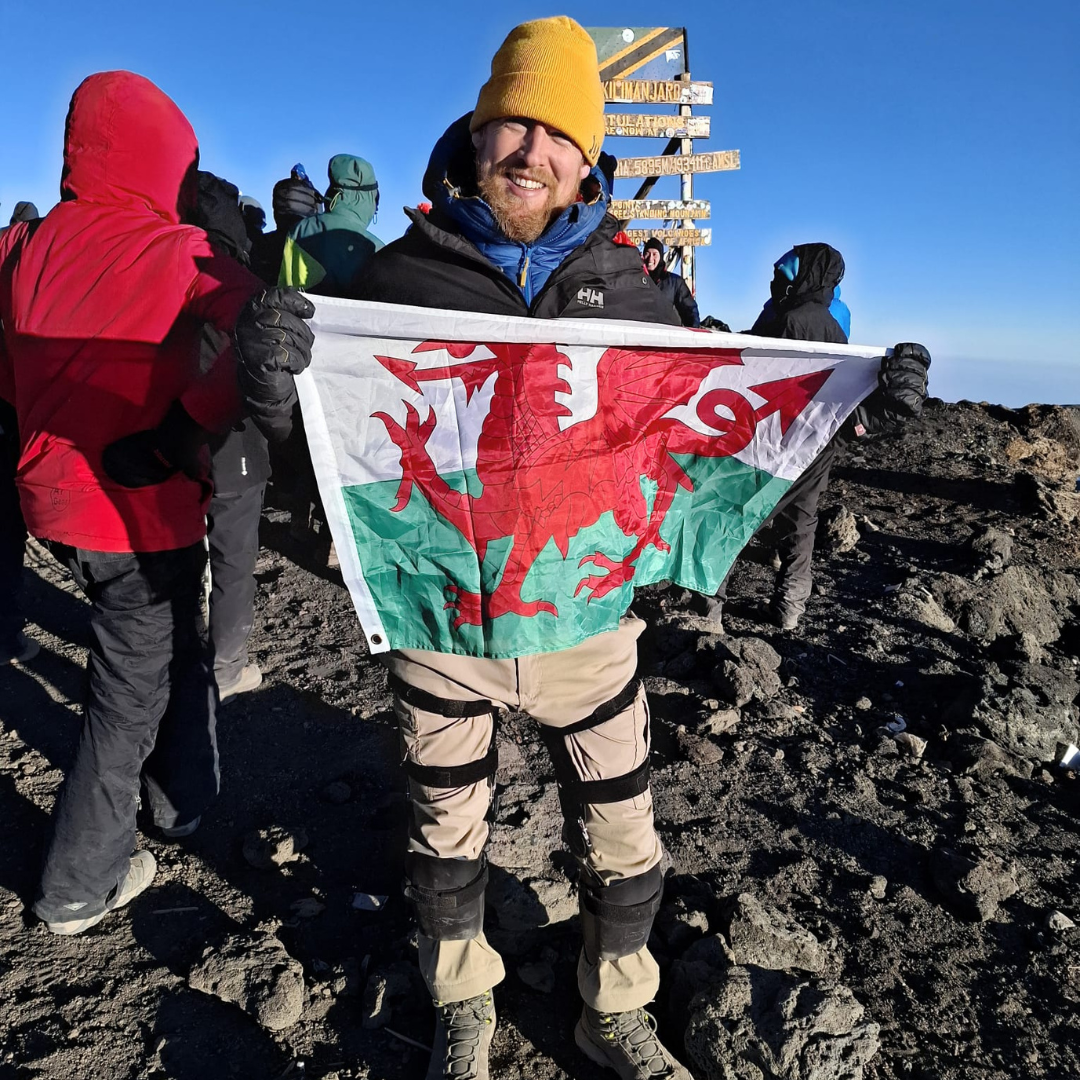
Mental strength from climbing Kilimanjaro. When people think of climbing a mountain like Kilimanjaro, they picture breathtaking views, personal triumph, and ticking off a bucket list goal. But for me, climbing Africa’s highest peak wasn’t about the summit photo. It was about confronting the limits of my mind far more than the limits of my body – and that’s exactly why I titled this story, Mental Strength from Climbing Kilimanjaro*. So, what has climbing Kilimanjaro taught me about mental strength?
I live with Complex Regional Pain Syndrome (CRPS), a neurological condition that causes constant pain and mobility challenges. I climb wearing KAFOs – leg braces that support me with every step. So when I committed to Kilimanjaro, I wasn’t just preparing for altitude and terrain. I was preparing for a test of mental strength unlike anything I’d faced before.
It Started Long Before the Mountain
Mental strength isn’t something that magically kicks in at 4,000 metres. It’s built in the months – and sometimes years – leading up to the climb.
I trained in freezing rain, through pain, with setbacks and doubts. Every session where I kept going despite discomfort was a deposit in the mental bank I’d later need at 18,000 feet. And I learned quickly: discipline beats motivation. You don’t wait to feel ready. You train yourself to show up anyway.
Leadership Lessons from the Trail
Climbing Kilimanjaro taught me as much about leadership as it did about altitude. Here are three lessons I brought back:
1. The Team Is Everything
On that mountain, it didn’t matter who was strongest. What mattered was who could adapt, support, listen, and move at the group’s pace. Leadership isn’t always about leading from the front – it’s knowing when to encourage, when to step aside, and when to push.
2. Self-Talk Shapes Reality
There were moments when I felt like I couldn’t take another step. But I learned to intercept those thoughts. Instead of “I can’t,” I started saying, “Just the next step.” Mental strength isn’t the absence of doubt – it’s the ability to move forward with it.
3. Celebrate the Micro Wins
Every water break. Every completed hour. Every vertical metre. On Kilimanjaro, the little victories add up. In business and life, we often wait for the ‘big win.’ But recognising micro-successes builds momentum, morale, and resilience.
The Night I Nearly Gave Up
Summit night is brutal. We left camp in pitch darkness, facing a steep, frozen climb. My hands were numb. My legs, already braced, felt like they were moving through cement. My breathing was short, my mind foggy. I hit my lowest point at the second-highest point of Kilimanjaro. Stella Point.
But I wasn’t alone.
Wilson, my climbing Guide, looked at me and said, “You don’t need to climb another mountain, you just have to find the strength to finish this one.”
That’s all it took. Not a motivational speech. Not a miracle. Just a reminder of how far I’d come – and how close I was.
What It Really Means to Be Mentally Strong
Mental strength isn’t about being fearless or bulletproof. It’s about:
- Being aware of your fears, and still showing up
- Knowing when to rest, and when to dig deep
- Asking for support and offering it in return
- Believing you belong, even when you’re the only one like you on the mountain
Climbing Kilimanjaro reminded me that strength isn’t loud. It’s not bravado. It’s pretty consistent. It’s patience. It’s showing up when no one’s watching.
Final Thought
The summit wasn’t the victory. The real win was who I became on the way up. A person who didn’t let pain define him. A person who leads with empathy. A person who’s learned that the hardest climbs build the deepest strength.
If your team, school or organisation is climbing its own metaphorical mountain – and needs support with mindset, resilience, or inclusive leadership – I’d love to share more.