

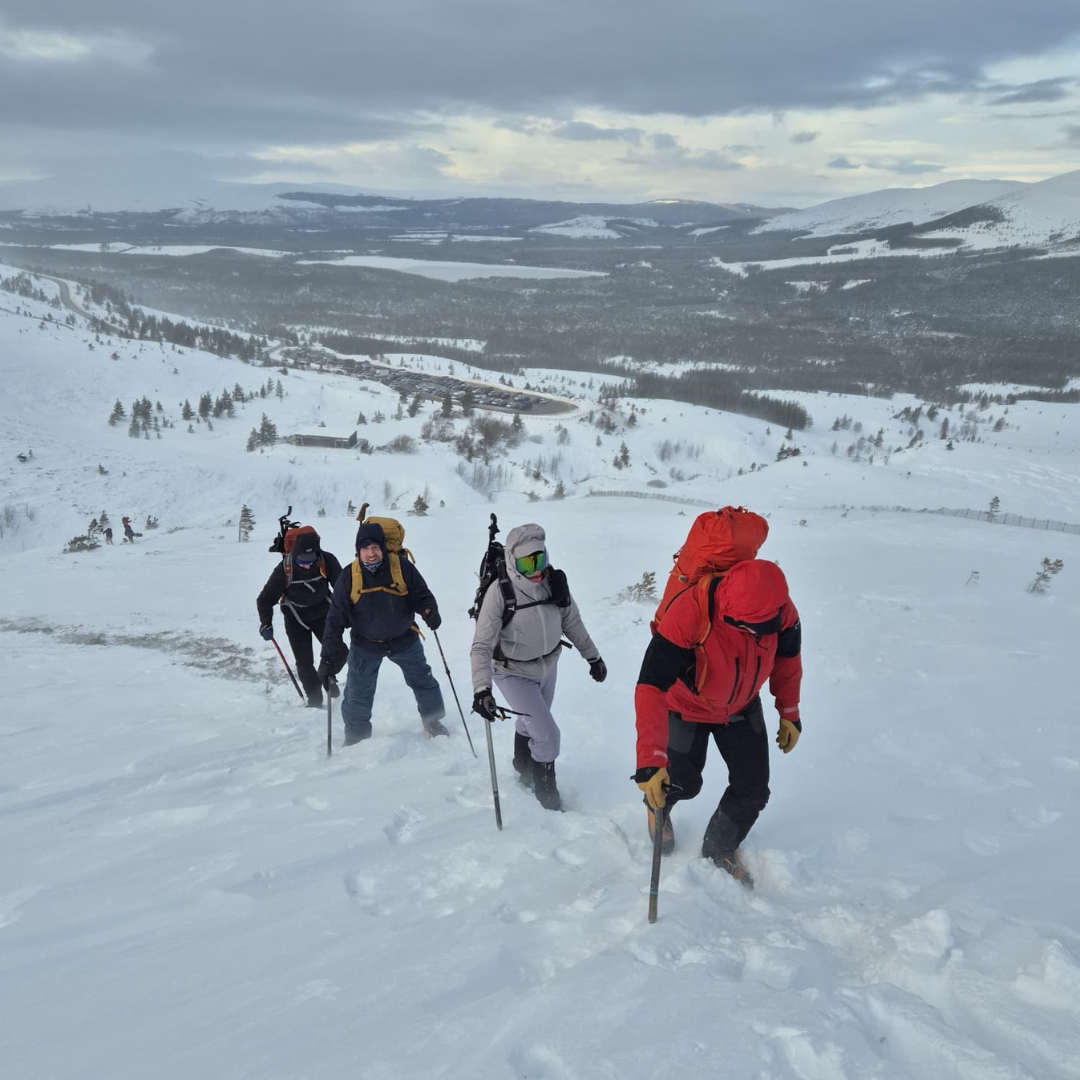
Leadership lessons from the mountains are simple, uncomfortable, and impossible to ignore once you have experienced a place where titles, ego, and hierarchy mean absolutely nothing. The mountains do not care what you do for a living.
They do not care about your job title, your CV, your following, or how important you feel in everyday life. Up there, none of it matters. The only things that count are preparation, judgement, trust, and how well you look after the people around you.
That is what makes the mountains such a brutal and honest teacher. It is also why I love being there, for me, it is more than just my story, it is what created my values.
When you step into that environment, everything flattens out. CEO, graduate, military veteran, first-time climber. You all start from the same place. Cold. Exposed. Human.
Ego Gets Left at the Bottom
One of the first lessons you learn in the mountains is that ego is a liability.
Confidence matters. Arrogance does not. Ambition can push you forward, but an unchecked ego can get people hurt. Out there, it is not about who leads in the boardroom or who usually has the final say. It is about who is most aware of the conditions, who is listening, and who is willing to adapt.
I have seen strong, capable people struggle because they could not let go of control. I have also seen quieter voices save entire teams because they spoke up when something did not feel right.
The mountain does not reward dominance. It rewards humility.
The Team Is the Strategy
In the mountains, you do not succeed alone. You move at the pace of the slowest person, not because they are weak, but because you understand that the goal is getting everyone back down safely.
That changes how you lead.
You start checking in, not pushing on. You watch body language as much as foot placement. You learn when to slow the group down and when to encourage them forward. You share the load. You make decisions together.
Looking after yourself is important. Looking after each other is essential.
The summit is optional. The team is not.
If There Is Any Doubt, There Is No Doubt
I was recently taught a simple rule in the mountains that has stayed with me ever since.
If there is any doubt, there is no doubt.
If something feels off, it probably is. Weather, fatigue, kit, mindset. Ignoring early signals is how small risks turn into serious problems. The mountains punish hesitation disguised as bravado.
That lesson translates far beyond climbing.
In leadership, in culture, in inclusion, when people sense something is wrong but feel unable to say it, the risk multiplies. The strongest teams are not the ones that push through discomfort at all costs. They are the ones where doubt can be voiced early, safely, and without judgment.
Listening is not a weakness. It is survival.
What the Mountains Teach Us About Work
Back at sea level, titles return. Hierarchies reappear. Ego creeps back in.
But the lesson still stands.
Progress is not driven by the loudest voice. Trust is not built by authority alone. And real leadership shows up in how we look after people when things get hard, not when everything is comfortable.
The mountains strip leadership back to its basics.
Clarity. Care. Collective responsibility.
They remind us that no one is above the conditions, and no one succeeds without the team.
That is a lesson worth carrying long after the boots come off.
I try to share this value and ethos in my talks and my message.