

Who Needs a Quiet Weekend When There Are Scottish Giants Waiting to Be Climbed?
Climbing Scottish mountains with a disability is not for the faint hearted. Some people unwind with a quiet weekend and a good book. Me? I lace up my boots, grab my crutches, and head for the mountains.
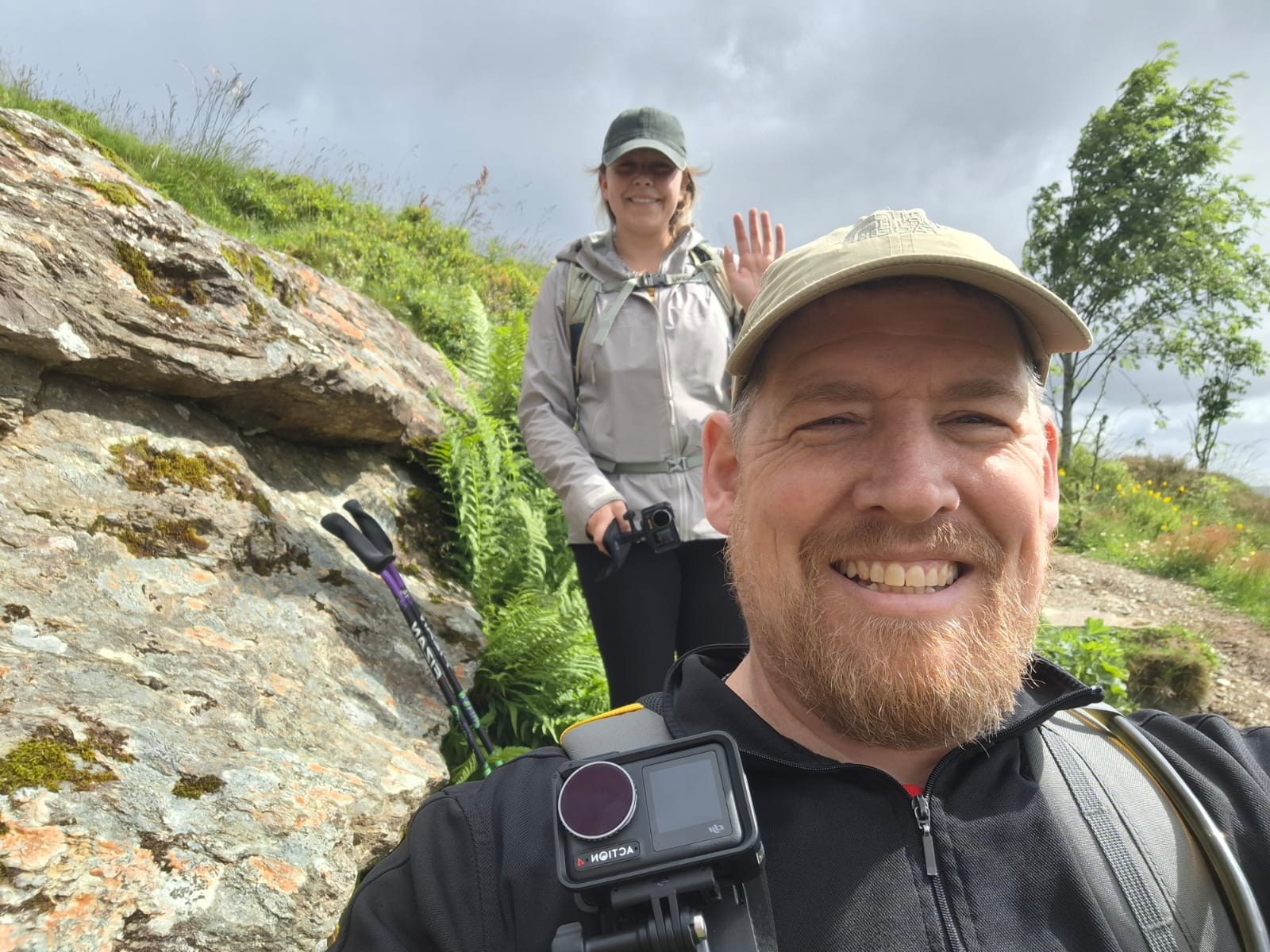
Recently, I had the pleasure of climbing some stunning Scottish peaks alongside my good friend Emma Forrest. And what a weekend it was.
Friday: Ben Ghlas & (almost) Ben Lawers
We kicked things off with Ben Ghlas, a solid start and a beautiful climb. Standing at 1,103 metres, it’s often overshadowed by its more famous neighbour but offers a stunning ascent with breathtaking views over Loch Tay and the surrounding highlands. The path winds steadily upwards, skirting the ridgeline, and gave us a good warm-up with a steady climb and bursts of sunlight between drifting clouds.
We then set our sights on Ben Lawers, one of Scotland’s highest Munros at 1,214 metres. It’s a commanding presence, known for its rugged beauty and dramatic peaks. But as we climbed, the weather turned sharply. A dense front rolled in with sideways rain, plunging visibility and making the already narrow path treacherous. The rocks became slick, and the wind picked up strength, howling across the ridges. We made the tough but right call to turn back. There’s bravery in pushing forward, but wisdom in knowing when safety must come first. The mountain will still be there another day, and it demands our respect.
Saturday: Meall Nan Tarmachan
If Friday tested our patience, Saturday tested our balance and resilience. Meall Nan Tarmachan, standing at 1,043 metres, is known for its dramatic ridgeline and panoramic views, on a clear day. We weren’t so lucky with the weather.
The ascent began under brooding skies, and before long, the wind had truly picked up. With gusts powerful enough to knock you off balance, even standing still was a challenge. Walking became a full-body effort, each step calculated, each pause a moment to regain control. The ridgeline, normally a stunning traverse, felt exposed and raw.
At one point, Emma and I had to lean into the wind just to stay upright. We exchanged a glance that said it all. “The summit is optional. Getting back down safely is not.”
Despite the intensity, the mountain was breathtaking. The rugged terrain, the fleeting views, and the sheer scale of the landscape reminded us why we do this. It’s not always about reaching the top. Sometimes, it’s about the fight, the awareness, and the grit it takes just to keep going.
These climbs aren’t just about ticking names off a list. For me, they’re about pushing boundaries, embracing nature in all its wild beauty, and proving that disability doesn’t define your ability. Being back on crutches for these climbs made the challenge even greater, but that just makes the experience even more powerful.
Every summit tells its own story.
Every descent teaches you something new.
And every moment, no matter how soggy, wind-swept, or physically exhausting, is absolutely worth it.
Would I do it all again? In a heartbeat.
Regrets? Not a single one.
Here’s to more wild weekends, more mountains, and more lessons learned above the clouds.
If you’ve enjoyed reading about this weekend’s mountainous adventure and the lessons learned along the way, I’d love for you to check out one of my earlier blogs, “Breaking the Chains of Stigma: Living with Hidden Disabilities.” It dives into the realities many of us face daily, the challenges you don’t always see, and the resilience it takes to rise above them. Just like on the hills, every step forward matters.